


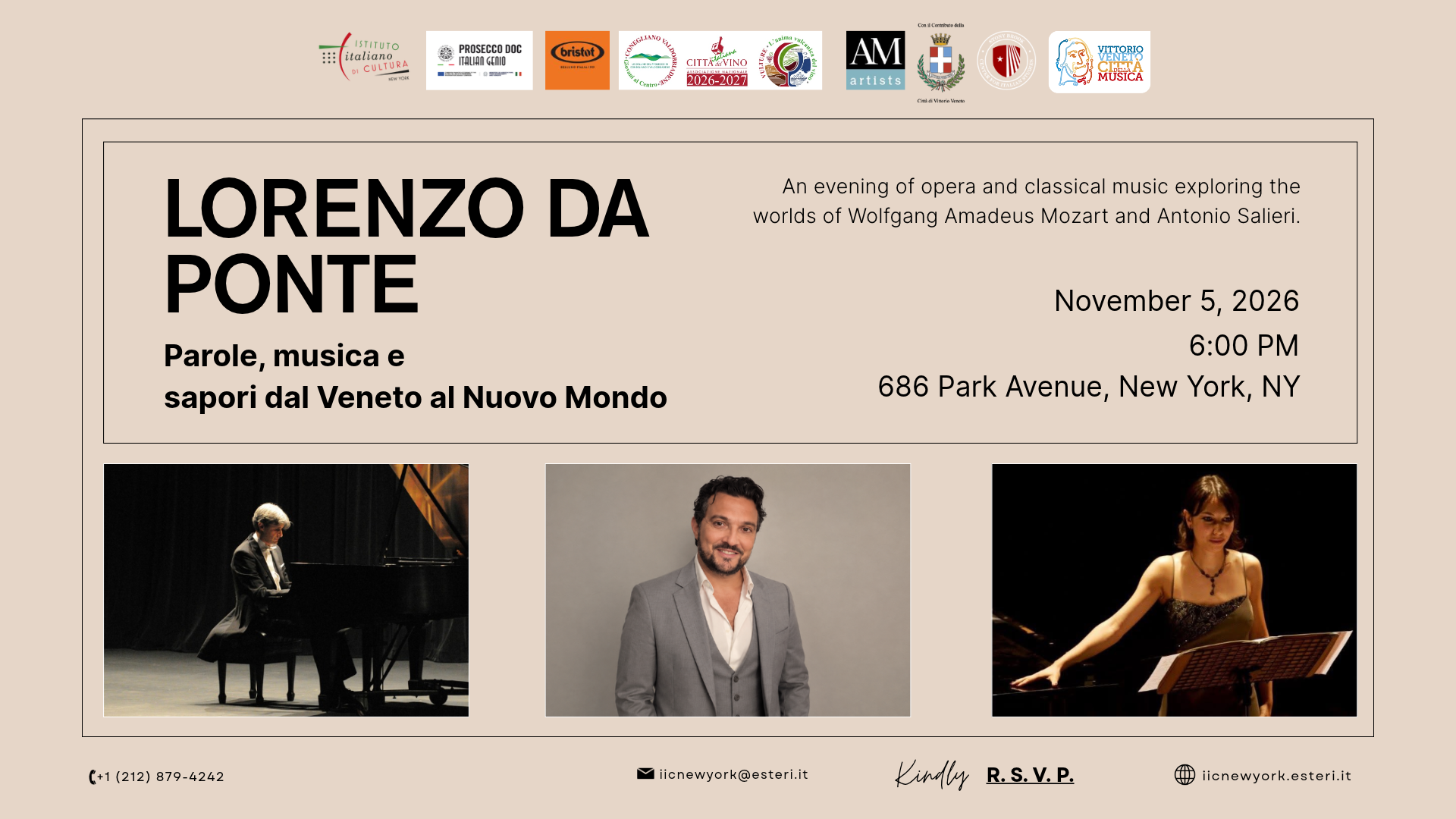
Mozart and Salieri: Love, Intrigue and Power
The musical programme invites us into the fascinating world of late eighteenth-century opera, where wit and elegance intertwine with passion, deception and the complexities of human nature. Through the music of Wolfgang Amadeus Mozart and Antonio Salieri, two leading figures of Viennese musical life, we discover a theatrical universe shaped by the spirit of the Enlightenment and the refined sensibilities of the Classical era.
Valentina Piovano, soprano
Giulio Boschetti, bass – baritone
Francesco Attesti, piano
Program:
Part 1 – Comic intrigue and romantic misunderstanding (the Da Ponte-style comedy of character)
- Mozart, from *The Marriage of Figaro*: “Deh vieni, non tardar”
- Salieri, from *La cifra*: “Nell’anno 1700”
- Mozart, from *Così fan tutte*: “Il core vi dono”
Part 2 – The pastoral, Arcadia, and the illusion of an idyllic world—a blend of deception, nature, and 18th-century elegance
- Salieri, from *Il pastor fido*: Duet between Corbaccio and Orimba, “Di questa chioma, ingrato”
- Aria (Corbaccio): “Non son queste…”
- Aria (Amarilli): “Care selve, amiche piante”
Part 3 – Power, jealousy, and the tragic (the shadows of the tyrant, vengeance, and nobility of soul)
- Mozart, from *The Marriage of Figaro*: “Crudel! perché finora…”
- “Vedrò, mentr’io sospiro…”
- Salieri, from *Axur, re d’Ormus*: Aria of Aspasia, “Come fuggir…”
Finale
- “Là ci darem la mano”
Concept
Part I – Comic Intrigue and the Misunderstandings of Love (the Da Ponte-style comedy of character)
Inspired by the comic situations and finely drawn characters of Lorenzo Da Ponte’s librettos, this opening section explores the playful interplay of desire, disguise and romantic confusion. From the tender intimacy of Deh vieni, non tardar in Mozart’s Le nozze di Figaro to the wit of Salieri’s Nell’anno 1700 and the seductive dialogue of Il core vi dono from Così fan tutte, love reveals itself as both a sincere emotion and a sophisticated game.
Part II – Pastoral Dreams, Arcadia and Illusion (a blend of deception, nature, and 18th-century elegance)
The second part transports us to an idealised pastoral world, where nature, elegance and artifice coexist in delicate harmony. Through excerpts from Salieri’s Il pastor fido, the bucolic landscape becomes a theatre of unfulfilled desire, playful deception and emotional vulnerability. The characters’ declarations of love and longing reveal the fragile boundary between the innocence of Arcadia and the intricate realities of the human heart.
Part III – Power, Jealousy and Tragedy
The final section explores the darker side of human relationships, where authority, jealousy, betrayal and revenge challenge the nobility of the soul. Mozart’s Le nozze di Figaro reveals the emotional turmoil concealed beneath the conventions of aristocratic society, while Salieri’s Axur, re d’Ormus brings the dramatic intensity of opera seria into focus. Here, love becomes inseparable from suffering, and the pursuit of power exposes the vulnerability of those who wield it.
Finale – Seduction and Complicity
The programme concludes with Mozart’s celebrated Là ci darem la mano from Don Giovanni, a duet in which seduction becomes a delicate contest of persuasion and surrender. With its irresistible charm and theatrical subtlety, this final encounter brings together the programme’s central themes: love as desire, illusion as art, and music as the ultimate expression of human complexity.
Through the contrasting yet complementary voices of Mozart and Salieri, this journey celebrates the richness of eighteenth-century opera: a world in which comedy and tragedy, innocence and deception, tenderness and ambition coexist in an enduring portrait of humanity.